
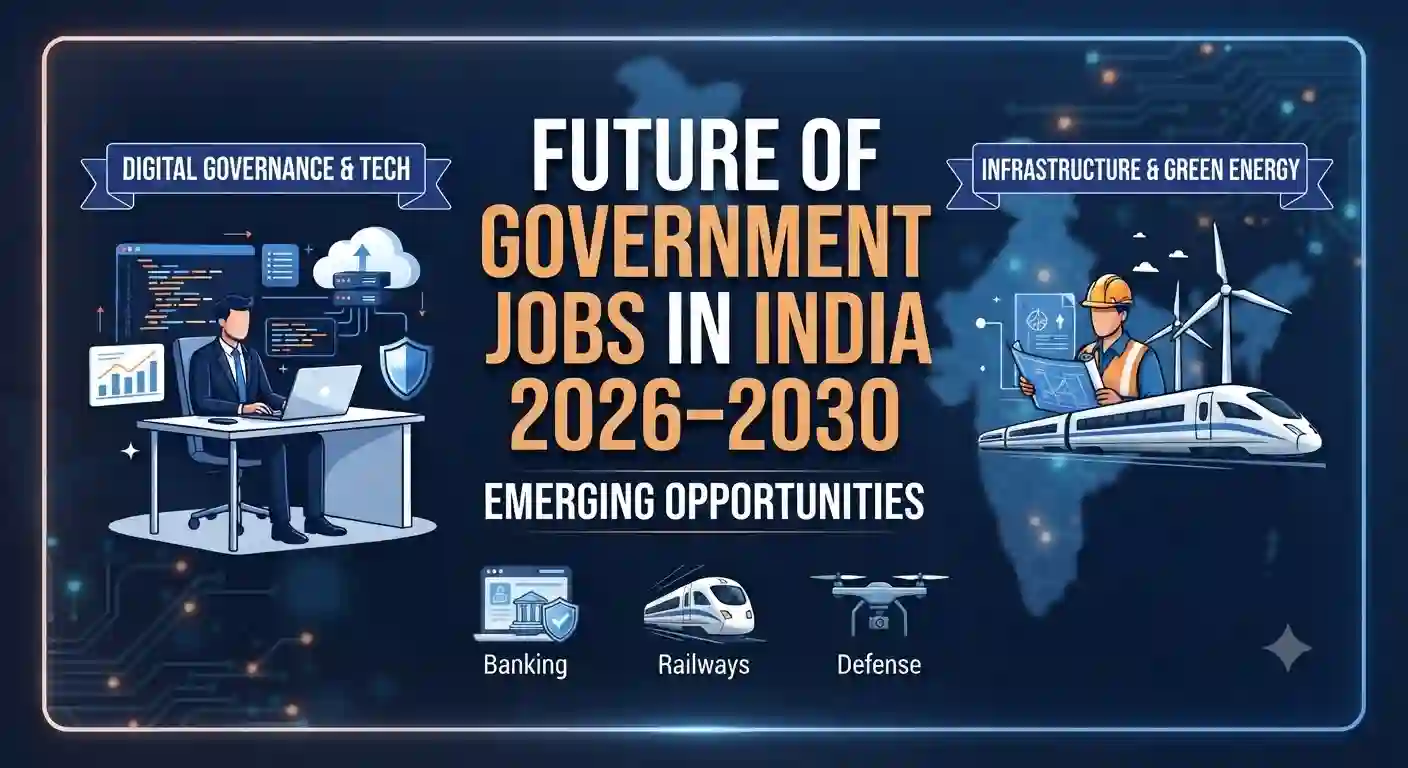
Future of Government Jobs in India (2026–2030): Emerging Opportunities
The landscape of public sector employment in India is undergoing a massive structural transformation. For decades, government jobs were synonymously associated with traditional administrative desks, paper files, and rigid hierarchical structures. However, as India rapidly digitizes its economy, scales up national infrastructure, and commits to ambitious global sustainability goals, the public sector is evolving into a tech-driven, highly dynamic employment ecosystem. Between 2026 and 2030, millions of vacancies are projected across central and state departments, driven not just by routine retirements, but by newly established technology missions, core infrastructure expansions, and governance reforms. For aspirants preparing through platforms like JobBodh, understanding these emerging trends is essential to align your skills with the future demands of public service.
1. The Shift Toward Digital Governance and Tech-Driven Public Roles
One of the most profound shifts in government recruitment between 2026 and 2030 is the integration of advanced technology into public administration. With large-scale national initiatives centered around e-governance, digital identity frameworks, public cloud systems, and AI-assisted data processing, government bodies are aggressively hiring specialists who understand digital infrastructure. While traditional administrative exams like UPSC Civil Services, state public service commissions, and SSC CGL will remain the gold standard, there is a surging demand for specialized technical portfolios. Departments dealing with cyber security, database management, digital public goods, and financial analytics are opening up structured lateral entry routes and specialized officer positions, bridging the gap between public policy and cutting-edge technology.
2. Infrastructure, Core Sectors, and Green Energy Expansions
India's aggressive push toward infrastructure modernization—anchored by massive national development pipelines, smart city missions, and industrial corridors—has made core engineering and project management sectors the biggest drivers of public sector hiring. Furthermore, India's commitment to net-zero carbon emissions and large-scale renewable energy transitions is creating entirely new job categories within public enterprises. Government agencies and public sector undertakings (PSUs) in power, energy, railways, and environmental management are increasingly recruiting specialists equipped with project management certifications, environmental compliance expertise, and technical engineering backgrounds. Aspirants with technical degrees and specialized skill sets can expect a wave of lucrative opportunities in these high-impact sectors.
3. Traditional Sectors Get a Modern Makeover: Banking, Railways, and Defense
While futuristic roles are expanding, traditional recruitment fortresses such as banking, railways, and defense continue to offer massive employment volumes, though with modernized skill requirements. Public sector banks managed by IBPS and SBI are undergoing rapid digital banking transformations, increasing the need for personnel skilled in data analysis, cyber risk management, and digital customer service systems. Similarly, the Indian Railways is modernizing its signaling systems, electrification grids, and rolling stock, leading to higher technical thresholds for engineering and non-technical popular category (NTPC) roles. Even defense establishments and police modernization drives are integrating automated logistics, surveillance tech, and digital intelligence frameworks, changing the daily operational nature of these prestigious services.
4. Strategic Preparation Roadmap for Aspirants (2026–2030)
Navigating the evolving public sector job market requires a forward-thinking preparation strategy that blends core general studies with modern adaptability:
- Master the Fundamentals: Solidify your foundation in core static subjects (Polity, Economy, History, and Geography) because they remain the unchanging bedrock of objective and descriptive recruitment tests.
- Cultivate Digital and Analytical Literacy: Familiarize yourself with basic data interpretation, economic indicators, e-governance frameworks, and emerging technological policies to handle advanced mains questions and interview evaluations.
- Stay Consistent and Agile: Track official notifications, curriculum updates, and daily current affairs meticulously through structured platforms like JobBodh to ensure you never miss a shifting exam pattern or new recruitment window.
The next half-decade promises unprecedented opportunities for dedicated aspirants. By aligning your preparation with India's national growth trajectory, you can successfully turn government service into a fulfilling, future-proof career!
Frequently Asked Questions (FAQs): Future of Government Jobs in India (2026–2030)
Q1: What are the primary driving factors for government job growth in India between 2026 and 2030?
Government job creation during this period is primarily driven by large-scale digital governance transformations, national infrastructure expansions, green energy transitions, core sector modernizations, and routine retirements across central and state departments.
Q2: Will traditional administrative exams like UPSC and SSC still hold relevance?
Yes, traditional administrative examinations conducted by the UPSC, state public service commissions, and SSC will continue to remain the gold standard for public sector recruitment and administrative policy roles.
Q3: Are specialized technical roles increasing in government departments?
Absolutely. With the rise of e-governance, digital identity frameworks, public cloud systems, and AI-assisted data processing, departments are increasingly opening specialized officer portfolios and structured lateral entry routes for tech and data experts.
Q4: How is infrastructure and core engineering recruitment changing?
India's aggressive push toward industrial corridors, smart cities, and sustainable energy projects has increased demand for engineers, project management specialists, and environmental compliance experts in public sector undertakings (PSUs).
Q5: What changes can aspirants expect in traditional sectors like Banking and Railways?
While hiring volumes remain massive, traditional sectors are modernizing rapidly. Public sector banks and railways now require personnel equipped with digital banking awareness, data analysis capabilities, and advanced technical skill sets.
Q6: Do I need special technological qualifications to clear future government exams?
While core general studies remain essential, having a baseline understanding of digital public goods, e-governance policies, and data interpretation gives candidates a distinct advantage in advanced mains evaluations and interviews.
Q7: How can aspirants prepare for the evolving recruitment patterns?
Aspirants should build a balanced preparation strategy by mastering static foundation subjects (Polity, Economy, History) while actively tracking modern economic shifts, emerging technology policies, and daily current affairs.
Q8: Where can I find structured study materials and updates for these emerging exams?
Platforms like JobBodh provide targeted educational guides, current affairs updates, exam syllabi, and practice resources tailored for competitive exam aspirants.
Q9: Will green energy and environmental sectors offer public sector jobs?
Yes, India's commitment to net-zero carbon emissions is creating new roles within renewable energy agencies, environmental management boards, and sustainable infrastructure public enterprises.
Q10: What is the best strategy to stay consistent throughout the 2026–2030 preparation window?
Consistency is key. Aspirants should maintain a disciplined daily schedule, map their reading strictly to official syllabi, practice regular mock tests, and keep track of changing notification patterns to stay ahead of the competition.